
The Anatomy of a Modern Mangal Piece: Design Elements
A modern mangalsutra doesn’t happen by accident. It isn’t just a thinner chain or a smaller pendant. It’s the result of deliberate design decisions, each one balancing symbolism, structure, and lifestyle. If traditional mangalsutras were optimized for ceremony, modern mangalsutra design is optimized for life.
1. Chain Architecture: The Foundation
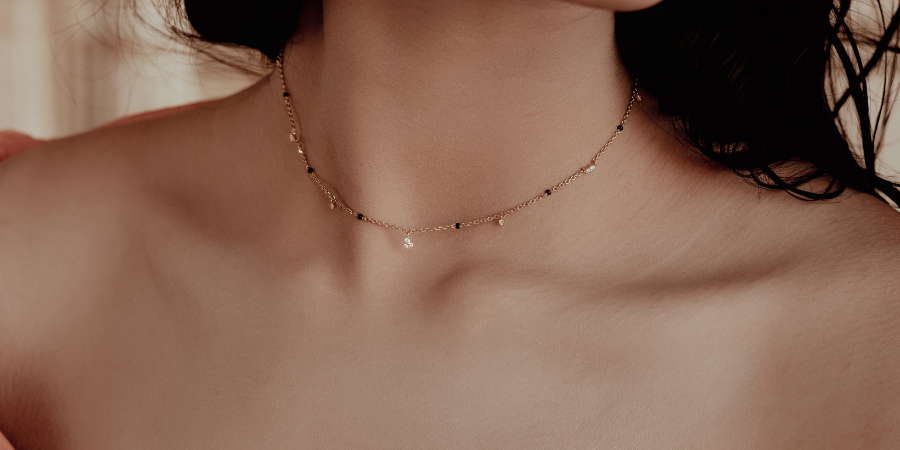
The chain is the backbone. In traditional pieces, thicker chains often supported heavier pendants and dense bead placement. In a modern mangalsutra, chain architecture prioritizes strength without bulk, refined links, thoughtful weight distribution, smooth articulation that moves naturally with your body. A well-designed chain sits flat against the collarbone, resists tangling, and layers seamlessly with other fine jewelry. Minimalist mangalsutra design starts here. If the foundation isn’t strong, nothing else holds.
2. Bead Placement: Symbolism Meets Proportion
Black beads carry protective symbolism in many mangalsutra traditions. In contemporary design, placement matters more than quantity. Modern pieces often use strategic spacing for visual rhythm, smaller bead sizes for subtlety, and integrated bead segments rather than full-length contrast. The symbolism remains intact, expressed through restraint rather than repetition. Proportion transforms tradition from loud to intentional.
3. Pendant Engineering: Form and Flow
The pendant is where identity becomes visible. In contemporary thaali design, traditional motifs may be simplified, geometry becomes cleaner, negative space is embraced. But aesthetics are only part of it. Pendant engineering determines how it sits. Does it tilt forward? Does it flip? Is the bail designed to distribute weight evenly? A modern mangalsutra pendant should feel integrated, not dangling awkwardly. When it sits correctly, the entire piece feels elevated.
4. Weight Distribution: Breaking the Heavier-Is-Better Myth
One of the biggest shifts in modern mangalsutra design is rethinking weight. Heavier doesn’t equal more meaningful. Balanced weight distribution ensures comfort for daily wear, reduces strain on the clasp, and prevents chain distortion over time. An everyday mangalsutra should feel present but not intrusive. You should forget you’re wearing it, until you remember why you are.
5. Clasp Design: The Unsung Hero
No one talks about clasps until one fails. Secure yet smooth closures are essential for durability. Overly tight clasps frustrate daily wear. Loose ones compromise safety. High-quality mangalsutra design treats clasps as integral, not afterthoughts. When you’re traveling, commuting, or moving through a full day, this detail matters more than you think.
6. Versatility: Designed for Layering
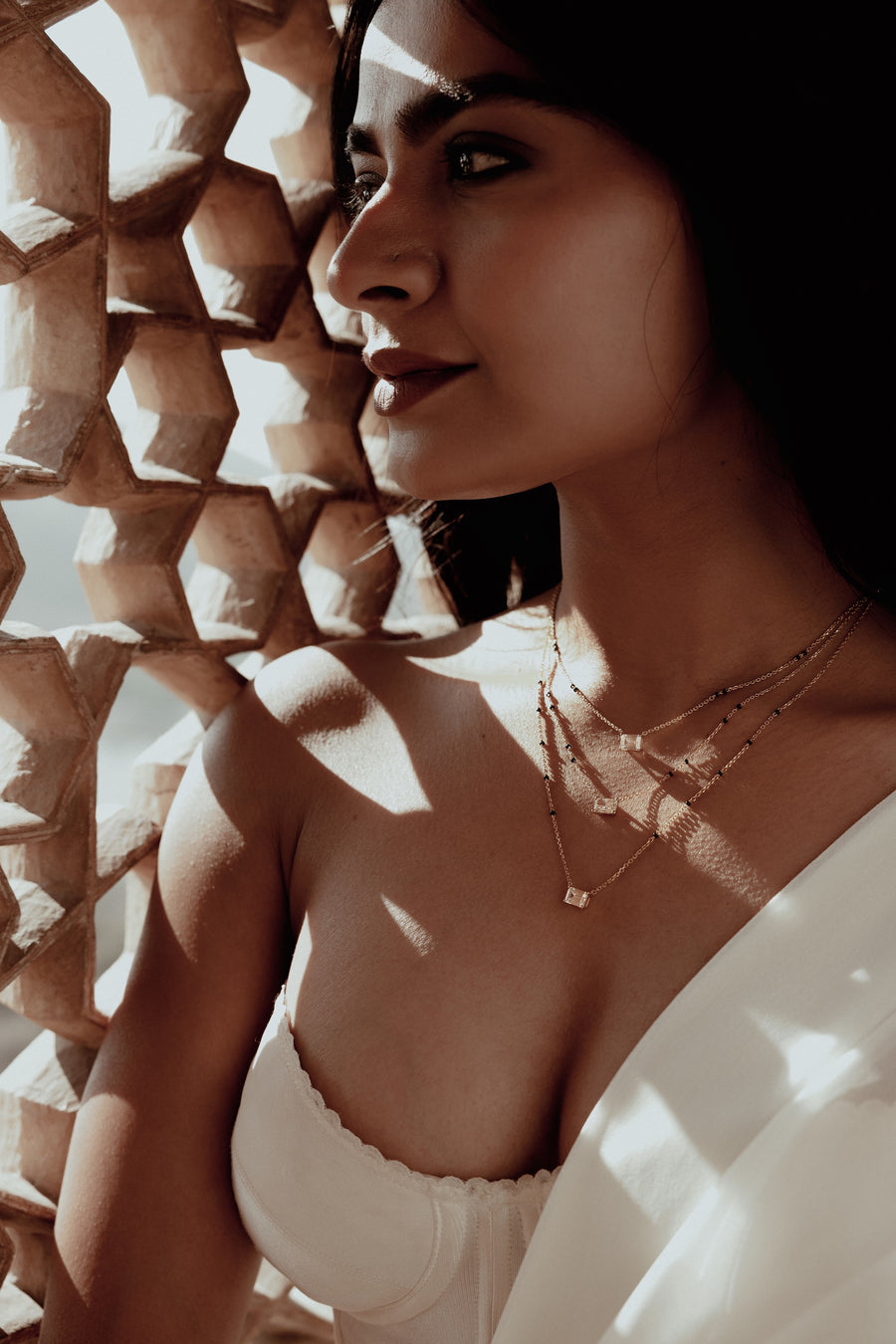
Modern NRI women rarely wear one piece in isolation. A contemporary mangalsutra must coexist with everyday gold chains, heirloom bangles, and other fine jewelry. Design elements like chain thickness, pendant scale, and bead integration determine whether it layers gracefully or competes visually. Versatility is not accidental. It’s intentional restraint. If you’re exploring pieces engineered with these elements in mind, our mangalsutra collection reflects this structural philosophy. And if you’re curious about the deeper evolution of contemporary thaali design, our educational guides unpack those shifts.
7. Symbolism, Distilled
Modern design doesn’t discard traditional symbolism. It distills it. Black beads become intentional accents rather than full-length statements. Gold remains central, carrying the cultural and spiritual weight it has always carried. The anatomy of a modern mangal piece is less about visual conformity and more about contextual intelligence. Does this align with how you live? Does this reflect partnership as you define it? Does this feel like an extension of you? When design answers yes to those questions, the piece becomes more than jewelry. It becomes alignment.